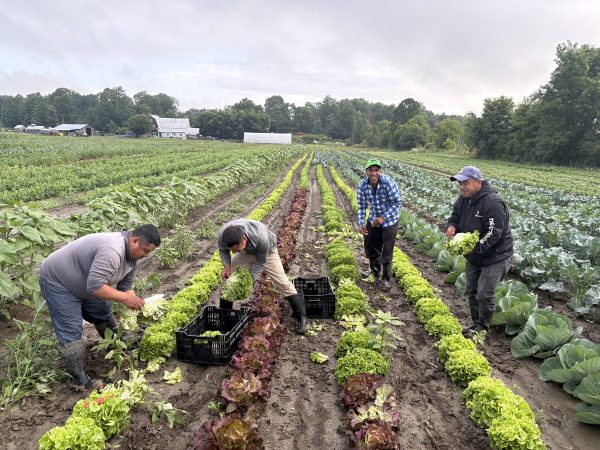
Pedro, Gaspar, Miguel and Florencia harvest fresh lettuce that will be sold within hours of picking. Consumers have nothing like this in the grocery store. Regardless of whether lettuce is grown in Quebec, Salinas on the Central Mesa: it’s going to be Mexicans that pick it. They seem the only workforce willing and able to do it. Working in El Norte they send home five times as much deniro as they would earn at home.
The political economy of lettuce:
Why Mexican lettuce outsells local lettuce and how big business controls markets
Summertime is the time to enjoy fresh food at its finest. As the warm months roll on, we’re treated to the waves of seasonal crops as they ripen: we start with asparagus, then strawberries, then come the new potatoes, raspberries and blueberries along with the real crown of summer: sweet corn. Then come the melons, field tomatoes and as the nights begin to chill, squash and leeks and Brussels sprouts.
 Holding down the backbeat to this rhythm of crops are the steadfast stalwarts of the garden: peas, carrots, beans, and of course: fresh picked lettuce. A summer salad is a delightful treat to remind us of how generous and thoughtful Mother Nature can be. But sometimes it comes with a little extra: in this case, explosive debilitating diarrhea (lasting months), delivered invisibly, silently via the Cyclospora parasite. Tens of thousands of Americans are currently cursed with this pathogen, and it comes from a single source of sewage infested irrigation water deep in Mexico.
I’m a big fan of lettuce. I’ve gone to a lot of trouble to get decent at growing it. It makes me money and likewise makes our direct-to-consumer customers very happy. This time of year is prime time for Canadian lettuce. Sown in the spring, everything from butterhead to romaine to iceberg is coming into perfection mid-summer — even up here in Canada. We can keep this going from June through October, until the frosts of fall produce slightly damaged crops that (while edible) would never pass the muster of grocery chain buyers.
Which begs the question: Why are Americans (and Canadians, too: check your labels!) eating foreign grown lettuce when it’s at absolute peak on our own doorsteps? As always, the answer is what it always is when it comes to economics: greed clothed in the skinsuit of “efficiency.”





Although we think of Mexico as a hot and sultry tropical country, the topography of Mexico belies this perception. The coastal lowlands are hot, for sure, but go look up the weather conditions and forecast for Mexico City. In July, it’s quite likely to be hotter here than there. At 6,000 feet of elevation, the Mesa Central of Mexico is near paradise when it comes to weather, but they also have major problems in forming a just or functional society. These two forces make it a great place to do business! 130 million oppressed Mexicans means an abundant and low-cost workforce, there’s no snow to move, and regulations are simply prompts for a bribe.
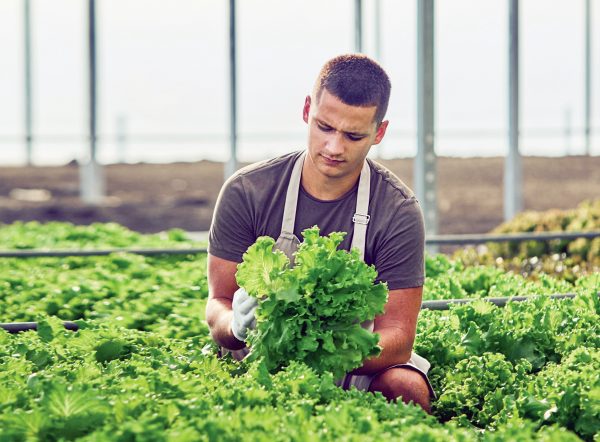
One local farmer can grow enough lettuce to feed the nearest town. But that doesn’t happen. Typically, the lettuce is not only from out-of-town but from out-of-country.
So, once you’ve set up the infrastructure and logistics in Mexico to meet the demands of the lucrative North American market, there’s little incentive to shift production northward as the conditions eventually become favourable for production up here: especially when the highest line item of expense in any horticultural operation: staffing, which is about 1/5 of what costs in Canada or the USA. That food safety and labour standards aren’t up to snuff south of the Rio Grande is of little concern to the huge players in the salad business.
In this particular case, Taylor Farms, a $7-billion private family business based in Salinas, California is the culprit. The largest player in the business of crunch, although their home locale is perfect for year-round salad production, they find it much more profitable to contract it to the lowest cost environment. Companies like Taylor, or the berry giant Driscoll, outsource almost all of their production. They are “farms” largely in name only, and pass the risks and responsibility of food production to the growers they enlist. These entities are honestly impressive in what they accomplish: we can thank them for the abundance of low quality, out-of-season produce in our grocery stores, which slowly numbs the palate of consumers for real, fresh food, and their understanding of what it takes to grow it. “Everything, all the time”, is the mantra of the North American marketer and consumer, and it distorts our diets, health, local economies and our basic understanding of nature.
You can make money growing lettuce — which is why it is such a protected and borderline corrupt industry. “Supply Management” exists in every industry that actually makes money. It just comes in different forms. There’s only one spot in Canada that cashes in on lettuce: Quebec. In the drained black marshland south of Montreal in Saint Remi — the garden of La Belle Province — they produce 90 % of Canada’s salad crops. Why we don’t do this elsewhere is largely a matter of policy. Given their ethnic nepotism, Quebec appears to be the last district in Canada where legislators seem to actually take an interest in their countryside or the well-being of their constituents: pouring resources into research, plant breeding, and investment for their farmers.
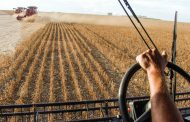
At this point in time, the food industry has become so centralized and financialized that beef is now a luxury item for normal Canadians (while it is probably the best use of much of our country’s farmland, and should actually be cheap and abundant). Dwindling numbers of farmers and equally grim market opportunities means that soybeans for export are now the dominant land use for Ontario soils: 3 million acres of the estrogenic bean, our #1 crop. Plant ’em, spray ’em, sell ’em. Have you eaten a soy bean lately? Are they even food? Who gains from their planting? Soybeans were literally unheard of as a crop here within recent memory, when you might have still seen a small field of potatoes destined for local markets. But who am I to question the invisible hand of the market?
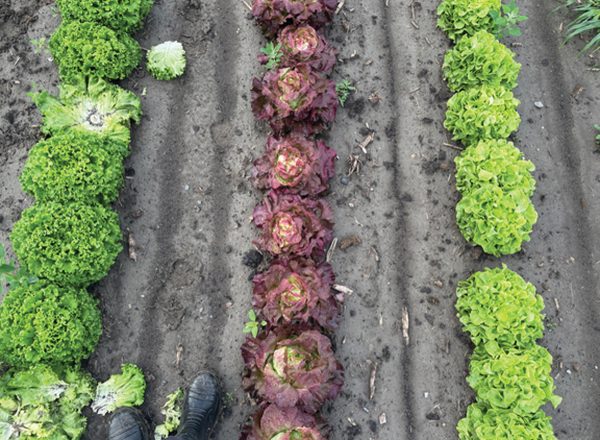
Growing lettuce close to home lets growers offer consumers more delicate varieties like, left to right: Green Summercrisp, Red Butterhead and Green Oakleaf. The industry standards of Iceberg and Romaine are the standards because they tolerate rough handling and long storage.
So, we ship soybeans to the Third World so they can raise the chicken and pork they’ve been starving for for thousands of years. We take their peasant labour and beautiful weather to eat blueberries in March thanks to extremely resource intensive supply chains. Also, you can’t have a plastic straw made of the same material of the clamshell of Peruvian raspberries. Oh, and the lettuce might give you crippling diarrhea for half a year, although some guy could grow enough on a few acres on the edge of the suburbs to feed your entire town (except there is no one that knows how to do that, and anyone that used to be around to pick it is either on drugs or government assistance — or both!)
The forces at work that generate the many absurdities of our current food system are well beyond correction by any one of us. Things like trade agreements and demographics are baked into the world we live in, and it’s hard to argue with cheap and abundant groceries (even if it doesn’t benefit our communities or our health). So, at least for the moment, the alternative to eating questionable food from thousands of miles away will remain a fringe and niche practice.
I often visualize small farms like my own as little gnats clinging to the belly of a great beast. It survives and prospers despite its miniscule nature, and while local food will never challenge The Leviathan toe-to-toe, it does provide a reprieve of health, meaningful work and human connection, and perhaps a victory if we have a long enough view of the matter.
As Saint Paul writes in his first letter to the Corinthians, “God hath chosen the foolish things of the world to confound the wise; and God hath chosen the weak things of the world to confound the things which are mighty.” Please don’t give up on your efforts to make the world a better place through agriculture. Every catastrophe: whether a scripted pandemic, or very real explosive diarrhea slowly and surely drives consumers in the right direction.
Patience, good cheer, and perhaps, most importantly, cunning, are required to survive in the ruthless world of agriculture. Success in farming is no longer just a matter of showing up to drive a tractor in circles. It demands flexibility, innovation and bold risks; and the nerve to bear out those actions. Farming is a great life (I would argue, one of the best): we couldn’t be more blessed to have the opportunity to pursue it. Faith and wisdom will prevail in our good work: as Christ extolls us in the Gospel of Matthew: “Behold, I send you forth as sheep in the midst of wolves: be ye therefore wise as serpents, and harmless as doves.”
Charles Summers owns Salt of the Earth Farm, a direct-to-consumer operation selling vegetables at the roadside, near Lyndhurst, Ontario.