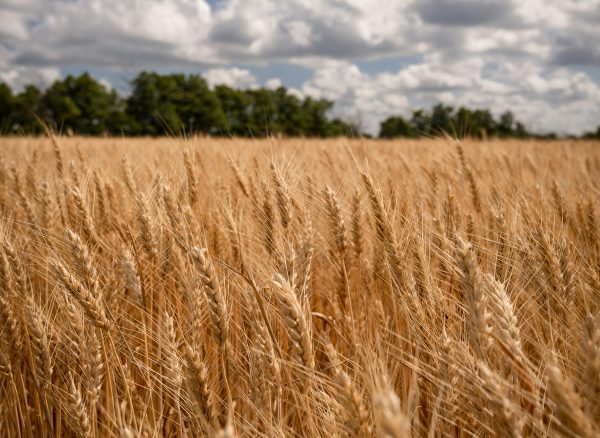
Over the last two decades wheat yields have increased an average of one bushel per acre each year in Ontario.
“Wheat is my favourite crop”
There are so many variables to tweak yield, agronomist says
Nelson Zandbergen
Farmers Forum
RIDGETOWN — Of all the Ontario field crops, winter wheat offers a good manager the best shot at influencing yield, according to University of Guelph agronomy professor Dr. David Hooker.

Dr. David Hooker, University of Guelph agronomy professor
“It’s a crop that seems to respond to management the most,” said Hooker, as there are more variables a farmer can play with to tweak yield. “To me as a manager, as a farmer, I should be most excited to grow a crop of wheat,” Hooker told attendees at the Southwest ag conference in Ridgetown on Jan. 8. “That means we can do the most to control the yield, or at least try and increase the economic yield, so that’s one of the reasons why wheat is my favourite crop.”




Winter wheat yields have been rising in Ontario, hitting a new record average of 101 bu/ac for soft red and soft white varieties in 2022. Hooker said that wheat yields have gone up an average of one bushel per acre each year over the last 20 years, accelerating to an average annual 1.8 bushels per acre increase in the last 10 years.
But the current Ontario production record still pales in comparison to the “theoretical” 268 bu/ac maximum shown to be possible in perfect circumstances, according to the professor.
This suggests ample room for on-farm yield improvement as producers take steps to minimize negative impacts in the field. Measures include the timely application of herbicides, fungicides and fertilizer, to the selection of modern, shorter wheat varieties that allow more light to penetrate the canopy, boosting photosynthesis during the crucial vegetative stage in particular.
Even though wheat is now shorter in stature, it continues to make gains in the amount of overall plant biomass, including more kernels produced per square meter. While the wheat plant tissues may not be as tall, the stems are thicker, equating to the same 62 % ratio of biomass above the ground.
It’s crucial during the first stage of growth, from emergence to flowering, for the wheat plants to “put the pedal to the metal” and convert as much sunlight into carbohydrates during that stage as possible, he said. That’s because some of those carbohydrates are banked to assist with kernel fill in the final growth stage.
Crop management is “all about managing photosynthesis” and constantly thinking about the needs of the “leaf factory” growing in the field, according to Hooker.