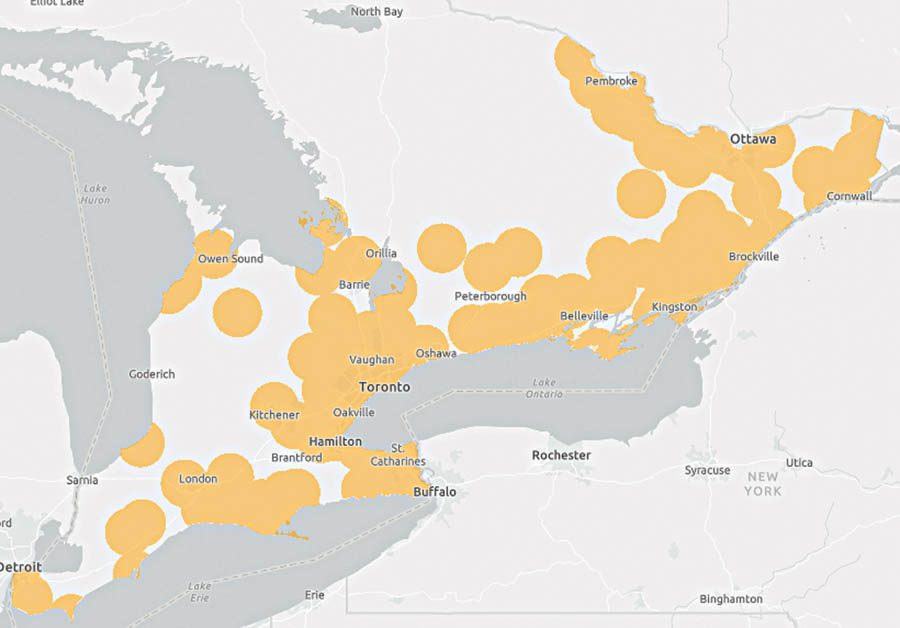
Location of ticks in Ontario in 2025.
Nelson Zandbergen
Farmers Forum
OTTAWA — The number of people infected by Lyme disease — a bacterial infection spread by black-legged tick bites — continues to rise in the province. Public Health Ontario (PHO) counted 152 diagnosed cases so far during the first four months of 2026 and could exceed 3,000 before the end of the year.
Although the risk is real, Lyme infections are still relatively rare in a province of nearly 15 million people. That’s a good thing because, if left untreated, the disease leads to a recurring type of arthritis about 60 % of the time. It can also cause myocarditis and neurological symptoms. Only a small percentage of ticks are infected with Lyme, and most people bitten by the eight-legged pests won’t develop the disease, according to experts. Even an infected tick needs to be attached for at least 24 hours to pass the Lyme bacteria to a human host. People that do contract the illness usually treated with an antibiotic but it’s not a sure-fire cure. A significant 5 % to 10 % of treated cases still endure “many months” of prolonged symptoms like fatigue, body aches, or difficulty thinking, according to the U.S. Centers for Disease Control





The peak months for infection are June, July, and August.
Ontario health units suggest a number of precautions to reduce the risk of being bitten.
Dress in light coloured clothing, which makes adult ticks and nymphs (small stage of the tick) easier to see when they are on you (because of their darker colour)
Remember to do a tick check when returning indoors
Thoroughly check your body for ticks and nymphs and promptly remove and dispose of them. If possible, have someone check you from behind.
Take a quick shower to help remove any unattached ticks.
Clothes spinning in a hot dryer for several minutes will kill ticks.
If you find an engorged tick on your body, one that has been there for at least 24 hours, you can seek a preventative antibiotic from your doctor or local hospital emergency department. Pharmacists can also prescribe the necessary antibiotic in eligible cases.
A new infection called alpha-gal syndrome has recently been discovered in the lonestar tick which has not been detected in Canada but fears are that birds from the U.S. could be bringing them north of the border. Alpha-gal syndrome causes an allergic reaction to red meat. The most northerly case is a woman with alpha-gal in Maine.