OPINION: We need more grass-fed milk producers
(You’ll get paid 10 cents more per litre)
Would an extra 10 cents per litre of milk shipped from your farm make a difference?
 How about lower veterinary bills due to reduced incidents of things such as acidosis, milk fever, laminitis or some reproductive problems…. or the costs of supplements you use to ward them off? Or are naturally-increased components in your milk what you would like to see instead of more supplements to increase those components?
And lastly, how about better cow fertility and reduced repeat breedings and better calf survival rates? And reduced hours balancing rations or hiring someone to do it for you?
All of the above are scientifically proven as the results of feeding high acid corn silage to dairy cows.
So if you answered “Yes” to any of the questions above, why not consider switching to a hay-based ration and shipping grass-fed milk?





We have been feeding a hay-based ration to our registered Jersey’s since we started milking in the early 1980s. It just seemed the right thing to be doing. There was a two-year trial of corn silage in the 1990s but we quickly switched back when we saw the effects on our cows. Just over seven years ago, in March, 2018, we started shipping grass-fed milk as part of the Eastern Ontario group and haven’t looked back.
The Dairy Farmers of Ontario has now differentiated between conventional grass-fed milk and organic grass-fed milk. There are two processors accepting both types of this niche market milk and a third processor accepting just conventional grass fed milk.
Each processor draws from a wide area and pays the cost of the additional transport themselves. Grass-fed butter sells for approximately double that of conventional butter in half pound packages.
The DFO is now looking for some more producers to fill plant orders preferably close to their location to limit the incremental transportation costs associated with these routes. It is an opportunity for some operations to increase income and cow health while reducing some costs.
Briefly, grass-fed herds must have 75 % of their dry matter intake made up of forage and/or hay and 25 % from grains (including grain corn) and supplements, excluding those prohibited, such as corn silage, corn distillers grains, any type of plant oils or fats, any type of marine oils, fats or by-products, any type of animal or poultry fats, full fat soybeans, sunflower or safflower seeds or oils (but these can be fed as a meal), linseed ( flaxseed) for less than 1 kg per day, urea or any other type of non-protein supplements.
Minerals and vitamins can be fed as required and as per label directions.
A record of feeding and pasture time as per protocols must be kept. As these are usually the same every day, a lot of ‘dittos’ are involved!
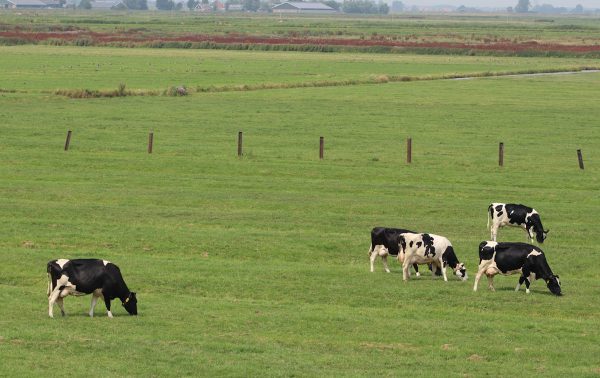
Cows must be on pasture for a minimum of 6 hours per day for 120 days each year, weather permitting. The minimum pasture available to each cow must be at least 0.13 hectares/0.33 acres, and pastures must have a written management plan.
Verification is done by DFO as well as by authenticating feeding compliance by testing biomarkers in bulk tank milk samples. Grass-fed milk must have biomarkers of less than or equal to 3.
For us, there were no additional costs to going grass-fed other than to divide our pastures to better manage them as we had been doing it for years. Just not paid for it!
For many there will be planning land usage as corn acres are reduced, pastures and additional hay land seeded if they are already not in existence, fencing, watering areas, etc.
If you are interested and have any concerns or “how can I” questions, contact Paul Risebrough, associate director of Logistics at the Dairy Farmers of Ontario. Email: Paul.Risebrough@milk.org or call at 905-817-2105. Paul will help you work through the challenges and timing issues you might be having.
Angela Dorie is an agricultural writer and a Jersey farmer near Cornwall.