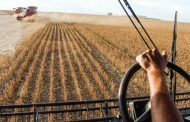
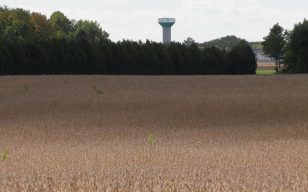
Soybeans being harvested near Inkerman, south of Winchester.
Many see end of high-price crop era
Nelson Zandbergen
Farmers Forum
OTTAWA — Farmers are feeling the pinch of falling commodity prices and, in many cases, the sting of missed forward-contracting opportunities, especially on this year’s soybean crop.
Consequently, the broader ag economy may be entering a period of belt-tightening as farmers reluctantly accept a lower price for their crops. Kicking themselves especially hard are those operators who couldn’t stomach pre-selling their 2024 soybean crop months ago because prices were poorer than in 2023 — but not as poor as the price after a steady slide into this year’s soybean harvest. The 2024 crop would have fetched about $15 per bushel if sold in early February, about $3 less than a year earlier. By September, the 2024 harvest was worth less than $13 per bushel.
Trying to pull the trigger on a forward contract in those circumstances is akin to “catching a falling knife,” Simcoe-based cash cropper and grain merchandiser Steve Kell said. Accustomed to more bullish markets, the farmer waits for a higher price that never comes and instead watches as the price continues to drop. “The situation just gets worse and you still can’t compel yourself to sell,” Kell said.
“It’s easy to sell on the way up. It’s hard to sell on the way down,” Morrisburg cash cropper Warren Schneckenburger observed. Though his own farm has mostly stuck to a consistent plan of forward-contracting 50 % of its crops, Schneckenburger knows well the dynamic that tempts producers to delay selling in the hopes of a price recovery.




“It’s FOMO (fear of missing out), simple psychology,” he explained. In addition, the “totally screwed up” market conditions of the last five years lulled farmers with higher soybean prices each harvest.
“I can tell you from past experience, sitting in line at the elevator at harvest with a truckload of beans pre-sold in, say, June, at $500 per tonne, and the guy beside you shows up and sells his on the spot for $680. Those memories stick with you,” he said.
That scenario won’t play out this year, according to Schneckenburger. It’s a return to the statistical reality where forward-contracting is the better move in 8 out of 10 years.
It seems that farmers “just kind of got used to perpetually high soybean prices and didn’t believe there was risk in not pricing them,” Campbellford cash cropper and elevator operator Peter Archer said. He estimated that about 30 % of Ontario’s 2024 soybean crop was pre-sold by August of this year — or “not nearly enough” to properly move the crop out of province before winter.
Martintown cash cropper Scott Kinloch was in that boat. He estimated pre-selling 30 % of his soybeans this year. “When you see the price now, the price six months ago seems awfully good,” Kinloch said. “There’s definitely some regret that we didn’t book some more earlier, but how do you know?”
Corn prices have been dogged by the same decline, dropping to about $4.80 per bushel by the end of August, down almost $1 from February this year, and down almost $2 from February 2023. Ontario farmers have managed to pre-sell more of their 2024 corn crop compared to soybeans, but profit margins are still shrinking. Whether a particular farmer makes money at a given crop price also depends on that farmer’s yields, input costs and local land rental costs, noted Peter Archer.
“Agriculture has spent time with prices below cost of production before … and it just feels like we’re back in that part of the cycle again now,” said Archer, who believes prices may go a little lower yet at harvest. “It just feels like we’re back in that part of the cycle now. We just have got to get our head around that, and the sooner everybody does that, I think the better off they are.”
Everyone agrees that fewer dollars in farmers’ hands this fall will have an impact on the broader agricultural economy.
Scott Kinloch and Archer both highlighted a recent drop in equipment prices at auction, which won’t help sales of brand new equipment. New million-dollar combines and sprayers “don’t make a lick of sense” in the current market conditions, Archer suggested.
Equipment dealers have enjoyed some “tremendous years,” St. Isidore cash crop and poultry farmer Markus Haerle said. “So I think they’re doomed to have one of those correctional years as well.”