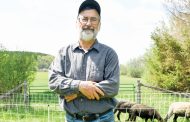
Dr. David Speicher
Virologist warns consumers of “biochemical dark matter” in Israeli synthetic milk
Nelson Zandbergen
Farmers Forum
OTTAWA — Far from being a clean, advanced alternative to traditional dairy, lab-grown milk is nothing less than an “unmapped biological soup” of fungal excretions “disguised as a dairy equivalent,” according to Ontario-based virologist Dr. David Speicher, who advises dairy farmers to remain vigilant against market inroads by the “counterfeit” product.
Recently expressing his concerns on his Courageous Truth platform, Speicher warned that the commercial push for fake — or “synbio” — milk comes with health risks from the genetically engineered yeast and fungal cultures used to produce it.
Beyond the health risks, synbio milk straight-up lacks the nutritional value of real milk with its “magnificent biological matrix of lipids, vitamins, and essential cellular components,” he wrote.
But the “nutritional void is only the first layer of this deception,” Speicher added, emphasizing that the “true danger” of the product “lies in the biochemical dark matter generated by precision fermentation.” The brew left behind by the yeast contains 236 fungal proteins and 93 uncharacterized fungal metabolites,” he pointed out, citing a peer-reviewed study published last spring in the journal Scientific Reports.







None of those substances has ever been tested for “human safety, chronic toxicity or allergenicity” at the “extreme exposure levels” when consuming the product, he wrote.
“By giving these things to people, we don’t know the long-term effects of these on health,” Speicher told Farmers Forum. “It’s a major red flag.”
Despite these missing safety profiles, regulatory bodies in the U.S. and Canada have cleared the use of synthetic milk ingredients in their jurisdictions, though much more limited in Canada. Health Canada has so far approved the Israeli-made ReMilk as a novel food ingredient while the U.S. market has access to several products, including Bored Cow. The products are marketed as “animal-free dairy,” and Speicher argues that this takes advantage of vulnerable consumers.
Ironically, while Canadian authorities open the door to the unquantified risks of fake milk, Speicher observed that they still “demonize” raw, real milk as too risky. There are health benefits to raw milk, he said, while advising that it “needs to be collected in a sterile environment and then chilled and kept cold as quickly as possible” to reduce the risks. Dairy farmers across the country drink fresh, raw milk every day in these circumstances.