Charlie Forman
Charles Summers
Farmers Forum
Spring has sprung, and we’re off to the races! The world is turning green and tractors are moving. Despite how busy everyone is, farmers don’t seem to mind to stop and talk with you. Two I’ve had the good fortune to interrupt lately are both living local legends. Let me tell you about them.
Neil Banks is in many ways the last of the old school farmers. He’s a lean and vigorous man for 81 years of age and not only successfully produces conventional cash crops, but he and his wife Gale are probably the best market gardeners I know. They produce some of the earliest and most beautiful vegetables you’ll ever see, and you may know them from Brockville Farmers Market as Corn Acre Farms. You’ve probably also heard of their daughter, Wendy, who runs Wendy’s Country Market, as well as the adjacent Furnace Falls Farm Retreat. It’s pretty hard to overstate how important Wendy has been to Kingston’s “local food” scene over the years.
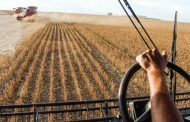
Charlie Forman is the closest thing I have to a mentor in agriculture – although you might not know it when you look at my modest little farm. At 70, Charlie grows thousands of acres of grain, produces pelletized biomass fuel, offers all kinds of custom farming, and in his free time (ha ha) helps his wife Christine produce various fruits and vegetables, including a year-round greenhouse operation yielding vine-ripe tomatoes and nursery stock. If you go to local restaurants in Kingston, you’ve eaten Forman Farms’ food. Charlie is a first-generation farmer, was a volunteer firefighter for many years, and now sits on the city of Kingston’s Rural Advisory Committee.
Neil and Charlie are an interesting case study in farmers because it demonstrates that in agriculture there is no one “right” way. Both of these men have distinct styles and manner of going about things. Neil farms with some equipment he paid for 30 years ago – when I interrupted him the other day, his son Jay was working up some land with a beastly Massey Ferguson that you start with a screwdriver. Charlie runs state-of-the-art gear he has to scour North America for, and isn’t afraid to take on some payments. Charlie is up to date on the latest research, trials and technologies. Neil started about 10 sentences with “My father always…” the last time he talked to me about farming. Profitable, productive farming can take many shapes and there is tremendous wisdom on both sides of this coin.





Neil Banks
Charlie’s absolute focus and determination started with a bone spur, when he was but 14 years old: the doctors thought it might be leukemia. So, they took a biopsy and sent it off to the famous Mayo clinic. Mail in those days was delivered by pigeon and stagecoach, and in the long absence of a response, Charlie was certain that he had but little life left to live. He did what any scared head-strong 14-year-old, looking death in the eye, would do: fully commit and resolve himself to pursue his lifelong dream of farming. Turns out it was a case of “no news is good news”: he found out after a year in limbo that he was actually perfectly healthy, but Charlie learned at a young age, that for him, it was farm or die.
Neil is grateful for all of the opportunities that farming has afforded him. In an era when agriculture in our area was in decline, and many left the business, Neil saw a tremendous opening. “The time and place I grew up in was the best – anywhere, anytime – for a man to work hard, and make something of himself. I know it, I’ll admit it, and I’m grateful for it.” And so, working the fields and forests, raising cattle, veggies and sweet corn, he put together 1,000 acres of farms that others had given up on. What does he have to show for it? Neil smiles, “I have a home for everyone in my family that needs one.”
Outside of being successful farmers with brave, steadfast wives, Charlie and Neil have a lot in common. They both have great stories about being headstrong young men and being told by their principals that they would “never amount to anything” (and of course being
able to satisfyingly laugh in their face later in life!). They’re both the first farm in the neighbourhood to have their fields planted and harvested, they both live well below their means, and they’ve both gambled big in farming, and won (with a bit of hard work along the way).
What they really share, though, is this increasingly rare quality of character. These men are fully formed, and “who they are” in a way you don’t see too much of in the wild. And as much as they love the craft of farming, a big part of why they do it is because they cannot stand to be told what to do. And so they traded a boss with a tie for an even harder one (Mother Nature) in order to be as in control of their own lives as possible – something very few of us can say!
But do you want to know something else they have in common? Bear with me here… but I just can’t stop thinking about this after I realized it the other day… They were both raised in very distinct, beautiful homes. The type of houses you notice, and think about, and become landmarks to you.
It’s not that the buildings are super fancy or large or even that they happen to be old. They’re just farmhouses. They weren’t engineered. They didn’t get a building permit. They were made by hand by men who lived in a world very much smaller than our own, and they fit into the countryside absolutely perfectly – like they grew out of the earth itself. The materials came from the stones, soils and forests in the immediate surroundings. Their character is a perfect reflection of the people and place they were created in. This is what makes them beautiful, this intimate intersection of necessity, human creativity and the landscape.
So did these buildings make Charlie and Neil the men they are today? I guess I’ll have to ask them. Maybe it’s a coincidence. But in a world of policy wonks and particle board, people like Neil and Charlie sure stick out. I’m sure glad they’re around because their lifetimes of experience are something they share liberally and without even really knowing it. Seemingly insignificant anecdotes or small remarks in passing from guys like these often produce “ah ha!” moments for me, firing off synapses in my brain, finally making connections that they take for granted on an intuitive level.
And believe me, I need all the help I can get! I tried, early in my adult life, to build a home out of and into the landscape and well, it looks about like what you’d expect a shack built by a 22-year-old from Belleville with no money and a chainsaw. It took a month to build and cost $1,500. It’s easy to save when you have no power or plumbing! Other than the concrete slab, the rest of it pretty well came off the land or out the garbage: logs, used lumber, straw bale walls parged with clay and manure, and a few sheets of plastic for the dirt roof. It was nothing to look at, but it worked, and most importantly, it was mine.
No doubt that hovel has returned to the earth from whence it came, and I’m sure my wife Morgan is expecting a bit better effort for this round. However, given that this is where my son Hiram spent the first years of his life (and he’s now an 18 year old sawyer/sugarmaker/lumberjack/farmer) perhaps there is something to the “childhood home defining your character” theory….
All I really know is that we all have a long way to go. Look around you – everything is a long way from reaching its potential. As Charlie always reminds me: “You’ve only got 30 growing seasons or so left Charles – you’d better make the most of them.”
Charles Summers owns Salt of the Earth Farm, a direct-to-consumer operation selling vegetables at the roadside, near Lyndhurst, Ontario.