St. Isidore crop farmer Arnold Kuratli has stocked up on food and worries about new global war.
Nelson Zandbergen
Farmers Forum
OTTAWA — As tensions escalate and munitions explode across the Middle East, ripples are felt across the ocean and along the concession roads of Ontario. Farmers are greatly concerned about the soaring cost of fertilizer and fuel, alongside weak or unimpressive commodity prices.
Yet optimism, adaptation and getting on with the business of farming are still the usual drivers. Farmers are a long way from fearing for their personal security in an increasingly troubled and unstable world, though some see the benefits of a little extra preparation.
Port Perry cashcropper John Molloy conceded that he keeps extra food on hand nowadays. “My pantry’s a little more full of rice and canned stuff,” he said, adding that he purchased a stationary generator a few years ago to increase self-sufficiency.
He also cited security concerns such as the societal increase in drug abuse, vehicle thefts and a lack of consequences for criminals.

And yet, Molloy still has a farmer’s optimism, saying he intended to plant his usual 500 acres of corn, even with what he believed was a high likelihood of losing money on the crop. He estimated the projected loss at $20 per tonne of yield, based on the futures price for corn at the end of March. Despite the negative figures, he was planting anyway because he already paid for the inputs, including seed and fertilizer, some of it applied to his land last fall.

Shawn McRae: Prepared for trouble
Beyond pure optimism, multi-generational Bainsville cashcropper Shawn McRae feels an obligation to plant even when the numbers don’t look good. “Quitting is just not an option,” McRae said. “You owe it to your ancestors to suck it up and figure out how to deal.”
The fertilizer requirements on his own farm were already booked when he spoke with Farmers Forum. The cost was “up sharply.”
He observed that while Canada should be a top producer of phosphate fertilizer, government policies have worked against mineral extraction and infrastructure, contributing to the current rise in costs. “That’s what we get for more than a decade of voting Liberal,” he said.
McRae also sees the value of ‘prepping” during these troubled times, saying he’s maintained a bunker stocked with dry beans, yeast and ammunition since 2008. He has also diversified into gold and silver to protect against the volatility of the international monetary system.
He recalled his grandfather’s stories about life on the same farm during the 1930s depression when desperate men would walk down the road looking for work. They left their families behind and offered to milk the cows and perform other farm chores in return “for a couple of hot meals and a place to sleep.” They were honest men of good character who didn’t steal from the farm, his grandfather told him.
“I see that shit coming again,” McRae added, “and hopefully with the same honesty attached to it.”
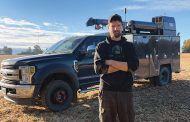
St. Isidore cashcropper Arnold Kuratli admitted that “World War 3” is his biggest concern, adding that his wife has always preserved food in glass jars the “old fashioned way.” They keep a few month’s worth of preserves in storage and grow their own garden, including potatoes. While he identifies as a Christian believer who doesn’t live in constant fear, he feels the weight of the news and worries about the inflationary impact of rising fuel prices on the general population, as well as farmers.
“Most people are running short because their money is not enough anymore,” Kuratli observed.
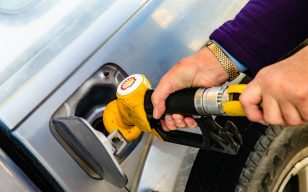
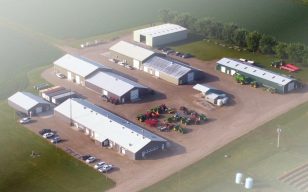
His fertilizer was bought and paid for last year, he said, which avoided the most recent price surge triggered by the U.S. and Israel’s attack on Iran. But Kuratli expects a $300,000 increase in his diesel fuel bills at his farming and business operations, including a peat-harvesting enterprise. To offset the 70-cent-per-litre rise in diesel prices since late February, Kuratli performed his own “hedging” maneuver on the commodity markets. Before the war broke out, he bought fuel futures equivalent to his own usage. Those futures are now more valuable and help to offset the additional cost of the actual fuel that he buys locally at the regular spot price.
To survive what he describes as a “disastrous” inflationary period, he advocates for a deliberate slowing down and a return to fundamental farming practices, preferably done by family members themselves without hired labour. He decries contemporary agriculture’s turn away from simplicity to more complicated and expensive processes and equipment. By indulging the equipment industry and by bidding up land prices, farmers have “done it to ourselves,” he argued. On the other hand, he complained that bureaucrats and governments have imposed “unbelievable paperwork” on farmers over the last 20 years.
Instead of feeding people, “we’re feeding the machine industry, we’re feeding the insurance industry, we’re feeding the government man,” he said, “And this all has to be paid out of a litre of milk or a kilo of soya or a kilo of corn.”
He suggested a focus on longevity rather than acquisition: “Make a decent crop, have a good rotation. Keep your machinery over many years.” Don’t chase the absolute maximum yield possible and use less fertilizer, he said. Don’t get down on yourself “and don’t try to do extra stuff. Just think carefully.”
Most of all, the current times have Kuratli thinking about what’s really important. “Give yourself time for your family and give yourself time to motivate each other and be thankful. That’s the way to do it now. It’s more important than any time before.”
Seed-crop producer Joe Hickson, of Lindsay, was more immediately concerned about timely delivery of his fertilizer. While Hickson pre-bought his fertilizer in February, he saw a bad omen in the amount of time it was taking his pedigreed pea seed inventory to arrive by rail from Saskatchewan. Those shipments usually come five days after ordering. “Now it’s taking three weeks to arrive at my dock,” he exclaimed.
He’s nervous about his fertilizer order. “Is it going to be in place when we need it?”
Hickson also noted that all of his freight bills are currently carrying an 18 % surcharge at the Midnight Acres seed business, an extra cost that wasn’t budgeted for.
In Renfrew County, cashcropper Colin Fletcher secured his fertilizer in January, but feels the squeeze elsewhere. “I filled everything on the farm that would hold diesel” in December, he said, noting that more recent fill-ups were 50 cents a litre higher.
Despite the stress, Fletcher maintained a stoic optimism when asked about planting crops on his 375 acres amid such uncertainty. “Anyone with common sense wouldn’t be doing it,” he quipped
Metcalfe farmer cashcropper Dean Patterson was less concerned, noting that “the price is the price” and that current fertilizer costs aren’t necessarily a record when adjusted for historical peaks. To adapt, the contrarian Patterson is actually increasing his corn acreage by 20 %, betting against the trend of others planting less corn.
Farmers are finding creative ways to shave pennies. Cobourg cashcropper Mark Burnham said he was reducing fertilizer rates and turning to biological products like humic and fulvic acids to keep nutrients available to the soil. He’s expecting a “tight, tight year” financially.
Dunvegan dairy farmer Josef Odermatt, already a fuel saver by practicing no-till agriculture for the last 27 years, said the high price of diesel will make him “think twice” when taking out his machinery, particularly when planning tasks like cutting hay.
He blamed the federal government for a lack of foresight, arguing that Canada should have built oil pipelines 15 years ago to ensure national wealth and lower energy costs.
Odermatt’s top concern was also driven by government policy: The construction of a battery energy storage facility next door to his place. Because of the risks of fire, he urges farmers to “do some research” and “use their brain” before agreeing to or allowing these projects nearby. The battery development frustrated Odermatt so much, he even looked at selling his Glengarry County farm and setting up in Alberta, he said, though nothing reasonable was available.
His passion for farming has kept him where he is. “I love my job… that helps a lot when you get up in the morning,” Odermatt said.
Arnold Kuratli echoed the sentiment, agreeing that it’s especially gratifying to be a farmer when everything seems so uncertain in the world. “Thank God, 100,000 times, I’m living on a farm,” he said.