I need to start out by disclosing that I am a capitalist. Entrepreneurs are clever. Businesses are competitive, and if you want to develop the most efficient and cost- effective way to fulfill consumers needs, you simply need to step back and let the market figure it out.
Unfortunately, history has taught us that humans can take greed too far, so society has a need to create legislation to create guardrails to curtail business’s poorer impulses, but otherwise the market is the most efficient way of sorting out supply and demand.
Last month China announced another round of punitive tariffs on Canadian canola in response to Canada’s 100 % tariffs on Chinese electric vehicles entering the Canadian market. This is both a devastating blow to Canadian canola producers, but it’s also a crisis of conscience when we think about how the Canadian economy should function.
Canola is a Canadian success story. 50 years ago, two plant breeders set out to create a superior version of rapeseed which would produce a high quality vegetable oil for human consumption. Through selection and crossbreeding they developed high oil, low erucic acid version of rapeseed and named it canola after the country in which it was developed.
Today canola is the second largest by acreage oilseed crop produced in the world, with an annual production of about 85 million acres.
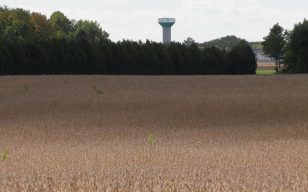
Canada is still the largest producer of canola in the world today with about 21 million acres of planted each year, but it is closely followed by India, (17 million acre), China, (15 million acres), The EU, (13 million acres), and Australia, (5 million acres). Canada’s annual canola production sits around 20 million tonnes per year with a typical market value of about $10 billion dollars. Canadian farmers create all of this economic activity because they are effective and efficient producers of a product that the world wants and requires.
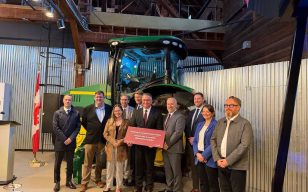
Compare this to the electric car industry, with tariff protections, that have put the canola producers under a massive strain. Canada doesn’t really have an electric vehicle industry without government funding. We’ve got a federal government incentive program which will rebate consumers up to $5,000 if they purchase an EV (and 5 provinces which have similar EV purchase incentive rebate programs). We’ve had massive federal/provincial funding announcements at Stellantus at Windsor, a potential VW battery plant at St. Thomas, and for both battery and EV production at Honda in Alliston, which total more than $25 billion in total investments if everything rolls out on schedule. There was also the Northvolt battery plant in Quebec, which received federal government funding but has already declared bankruptcy without ever producing a battery. All of this is backed up by the Electric Vehicle Availability Standard in Canada which requires that by 2026, 20% of new vehicle sales are EV’s, by 2030, 60% of new vehicle sales are EV’s and by 2035, 100% of new vehicle sales are EV’s.
I am not going to debate society’s interest in low or zero emission vehicles. It is a noble goal. The question is why did we throw Canada’s canola industry under the bus trying to protect an industry that we clearly haven’t figured out how to do cost effectively?





For example: I really like coffee. I grow crops on my farm, but I can’t grow coffee beans on my land in Simcoe County because the environment won’t allow for it. Theoretically, the technology exists to build an indoor coffee plantation where we could control the temperatures, light, and moisture so that we could grow coffee beans in central Ontario, but it wouldn’t be very cost effective. There is no doubt that it would create jobs, but it would be a crazy ask to expect grants to build an Ontario coffee production industry and impose tariffs to protect it from lower cost Colombian outdoor grown beans.
I do believe that the Chinese are astute enough chess players to realize that the regions of Canada that produce canola are different than the geographical parts of Canada which rely on auto sector jobs. They are without a doubt trying to trigger some regional discomfort within the confederation by choosing to target canola as a retaliatory countervail against Canada’s tariffs on Chinese electric vehicles.
The current issue of canola tariffs and Chinese electric vehicles causes us to focus on the whole existential question about how Canadian policy makers interact with business. We can’t use tax dollars to incentivize consumers to buy a product like electric vehicles, and use tax dollars to subsidize industry to create those same vehicles, because there is simply a finite supply of tax dollars available to be handed out. Our political zeal for interfering in the EV markets has just caused catastrophic damage to the canola sector which was perfectly capable of functioning well on its own merit.
Why don’t we have the same confidence in the EV market? There is without question a growing portion of the marketplace interested in purchasing zero emission vehicles. The technology is improving at a very quick pace, and Canada is blessed with the natural resources and skilled workforce to figure this market out.
Canada’s canola industry has very clearly established a role for itself in the global agricultural economy without very much participation from government. They don’t deserve to be the victim of a political squabble over electric vehicles. In fact, it would be better to use canola producers as the example of what happens when we let ingenuity, resourcefulness, and consumer demand drive the marketplace.
Steve Kell is a Simcoe County crop farmer and handles grain merchandizing for Kell Grain, with elevators in Belleville and Gilford.