
IS CANADA COOKED?
Canada headed toward communism and youth should get out, constitutional expert says. The rest of us should pray, push back
“Thou art a traitor: Off with his head!” commanded Richard, Duke of Gloucester, on the mere suspicion that his close friend, Lord Hastings, was a turncoat. Moments later, having seen the grizzly, lifeless head satisfactorily displayed before him, the duke sat down for lunch. In the play “Richard III,” William Shakespeare’s graphic portrayal of this actual 15th century execution displays the historical fragility of human rights.
 Can Canadians today feel safe from such summary judgments made by those in authority? Are there sufficient checks and balances on state powers?
On Saturday, April 11, over 200 people gathered in Grimsby to hear about constitutional authority, land use, and property rights in Canada. The independent study group, Upper Canada Land Titles & Patent Research Initiative, hosted an informative conference featuring constitutional law experts, Shawn Buckley and Bruce Pardy.
Event organizers, Joan Olech and Tony Kaluzny, opened with a session outlining how existing laws should grant protection to private property rights. Their thorough understanding of the formation and evolution of property rights, supported by their practical legal experiences, were well received by those in attendance. They summarized that if the current, increasingly prohibitive restrictions on property rights would have been attempted at the birth of confederation, there would be no Canada today.
Any encouragement inspired by Olech and Kaluzny was quickly dampened when Shawn Buckley and Bruce Pardy took the stage. Pardy, a professor of law at Queen’s University in Kingston, led with the comment, “We are modern serfs,” concluding that if done the right way, just as in feudal days the state can take away any property rights we have. “Believing how things should be (according to our personal understanding of law) is not how things are.”
Pardy repeatedly referred to the weakness of the Canadian Constitution in protecting property rights and subsequently, human rights. While our constitution and laws are generally perceived to have been written for the common good, they are not written in stone.
Rather, the constitution is subject to the interpretation of the courts, and rights are subject to change by legislature and the whims of administrative bodies. And since those three branches of governance now have the same interests, they no longer provide the critical checks and balances that historically prevented the concentration of power in any one part of the State.
A system of governance that once served Canadians well has now been corrupted by a hunger for power and control, rather than serving the people.
Buckley addressed the United Nations Declaration on the Rights of Indigenous Peoples Act (UNDRIP), a United Nations project which has been developed over a long period of time. Buckley stated that UNDRIP was deliberately instituted knowing that it would result in the disruption of an entire civilization for the purpose of rebuilding Canada into a Communist state.
Buckley also pointed out that every sector of society will be targeted for full government control. He predicted that agriculture is going to be hit with a wave of regulations unlike any seen before. Small producers will find it easier to quit than comply, while mega operations will submit to be allowed to continue production. The newly-developed UN program, “One Health,” will be the template for asserting standards of production and consumption, limiting individual choice and actions to those that are determined to “sustainably balance and optimize the health of people, animals and ecosystems.”

When questioned on how to “fix the system,” Pardy replied that one way is to place term limits on bureaucracy, the part of the state that wields an undue amount of influence on governance. However, Buckley said the system won’t be fixed because it’s working for those who created it.
A question raised in the “Q & A” session following the presentations shook the audience. In reply to “What direction would you give young Canadians?” Pardy immediately responded, “Get out. If they can find a place that will give them opportunity based upon their merit, they should take it.” Pardy’s response triggered an audible gasp in the auditorium.
Ironically, at almost the same moment as Pardy issued his dire warning, attendees at the Liberal convention in Montreal were presented with a proposal that there should be a $500,000 exit tax on young Canadian professionals who are fleeing Canada.
Buckley concurred with Pardy’s response, highlighting the sorry reality that the young generation of Canadians has no concept of freedom or privacy because of pervasive surveillance technology and state intrusiveness. The modern generation has been raised as “trained victims” in his view. They look to the government to provide solutions to their perceived victimhood, having been conditioned to accept increasingly Marxist ideology.
The message from Buckley did offer more hope: Each individual has a responsibility to raise awareness of the dire situation of Canada with those around them and what is causing the problems. Most importantly, Canadians need to return to the Christian faith that provided the foundation of our civilization.
When asked if there’s hope for Canada, Pardy replied, “Yes, but not false hope. So, yes and no.”
He repeatedly referred to the need for constitutional reform that limits the power of government.
When asked about the prospect of Alberta’s separation from Canada, Pardy and Buckley were surprisingly in full agreement: if Alberta separates, it might provide the necessary shock needed by the rest of Canada to wake up and take action to push our overbearing government back into its rightful place. However, he voiced concern that it would not happen.
When the session concluded, there is power in numbers, but action is required now if Canadians want to keep their heads.
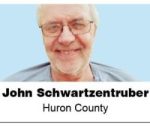
John Schwartzentruber is a Huron County farmer.






























OPINION: Is Canada cooked? Canada headed toward communism and youth should get out, constitutional expert says.
IS CANADA COOKED?
Canada headed toward communism and youth should get out, constitutional expert says. The rest of us should pray, push back
“Thou art a traitor: Off with his head!” commanded Richard, Duke of Gloucester, on the mere suspicion that his close friend, Lord Hastings, was a turncoat. Moments later, having seen the grizzly, lifeless head satisfactorily displayed before him, the duke sat down for lunch. In the play “Richard III,” William Shakespeare’s graphic portrayal of this actual 15th century execution displays the historical fragility of human rights.
On Saturday, April 11, over 200 people gathered in Grimsby to hear about constitutional authority, land use, and property rights in Canada. The independent study group, Upper Canada Land Titles & Patent Research Initiative, hosted an informative conference featuring constitutional law experts, Shawn Buckley and Bruce Pardy.
Event organizers, Joan Olech and Tony Kaluzny, opened with a session outlining how existing laws should grant protection to private property rights. Their thorough understanding of the formation and evolution of property rights, supported by their practical legal experiences, were well received by those in attendance. They summarized that if the current, increasingly prohibitive restrictions on property rights would have been attempted at the birth of confederation, there would be no Canada today.
Any encouragement inspired by Olech and Kaluzny was quickly dampened when Shawn Buckley and Bruce Pardy took the stage. Pardy, a professor of law at Queen’s University in Kingston, led with the comment, “We are modern serfs,” concluding that if done the right way, just as in feudal days the state can take away any property rights we have. “Believing how things should be (according to our personal understanding of law) is not how things are.”
Pardy repeatedly referred to the weakness of the Canadian Constitution in protecting property rights and subsequently, human rights. While our constitution and laws are generally perceived to have been written for the common good, they are not written in stone.
Rather, the constitution is subject to the interpretation of the courts, and rights are subject to change by legislature and the whims of administrative bodies. And since those three branches of governance now have the same interests, they no longer provide the critical checks and balances that historically prevented the concentration of power in any one part of the State.
A system of governance that once served Canadians well has now been corrupted by a hunger for power and control, rather than serving the people.
Buckley addressed the United Nations Declaration on the Rights of Indigenous Peoples Act (UNDRIP), a United Nations project which has been developed over a long period of time. Buckley stated that UNDRIP was deliberately instituted knowing that it would result in the disruption of an entire civilization for the purpose of rebuilding Canada into a Communist state.
Buckley also pointed out that every sector of society will be targeted for full government control. He predicted that agriculture is going to be hit with a wave of regulations unlike any seen before. Small producers will find it easier to quit than comply, while mega operations will submit to be allowed to continue production. The newly-developed UN program, “One Health,” will be the template for asserting standards of production and consumption, limiting individual choice and actions to those that are determined to “sustainably balance and optimize the health of people, animals and ecosystems.”
When questioned on how to “fix the system,” Pardy replied that one way is to place term limits on bureaucracy, the part of the state that wields an undue amount of influence on governance. However, Buckley said the system won’t be fixed because it’s working for those who created it.
A question raised in the “Q & A” session following the presentations shook the audience. In reply to “What direction would you give young Canadians?” Pardy immediately responded, “Get out. If they can find a place that will give them opportunity based upon their merit, they should take it.” Pardy’s response triggered an audible gasp in the auditorium.
Ironically, at almost the same moment as Pardy issued his dire warning, attendees at the Liberal convention in Montreal were presented with a proposal that there should be a $500,000 exit tax on young Canadian professionals who are fleeing Canada.
Buckley concurred with Pardy’s response, highlighting the sorry reality that the young generation of Canadians has no concept of freedom or privacy because of pervasive surveillance technology and state intrusiveness. The modern generation has been raised as “trained victims” in his view. They look to the government to provide solutions to their perceived victimhood, having been conditioned to accept increasingly Marxist ideology.
The message from Buckley did offer more hope: Each individual has a responsibility to raise awareness of the dire situation of Canada with those around them and what is causing the problems. Most importantly, Canadians need to return to the Christian faith that provided the foundation of our civilization.
When asked if there’s hope for Canada, Pardy replied, “Yes, but not false hope. So, yes and no.”
He repeatedly referred to the need for constitutional reform that limits the power of government.
When asked about the prospect of Alberta’s separation from Canada, Pardy and Buckley were surprisingly in full agreement: if Alberta separates, it might provide the necessary shock needed by the rest of Canada to wake up and take action to push our overbearing government back into its rightful place. However, he voiced concern that it would not happen.
When the session concluded, there is power in numbers, but action is required now if Canadians want to keep their heads.
John Schwartzentruber is a Huron County farmer.