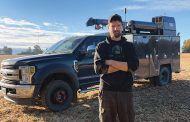
Nicole and Ross Toebes bought a 200-acre farm in Prince Edward Island for less than half the price of one in Ontario.
Ontario couple buy their first dairy farm — but it’s in P.E.I.
Nelson Zandbergen
Farmers Forum
CHARLOTTETOWN — The dream of milking their own cows on their own farm has finally come true for Ross and Nicole Toebes — but not in Ontario.
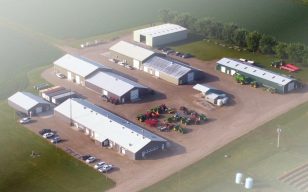
The young Hamilton-area couple went from aspiring farmers to the real thing last fall after closing a deal for a modest Prince Edward Island dairy operation with a milking herd of 20 animals. Located west of Charlottetown, their farm includes 200 acres plus some rented land, which they figured would cost more than $4 million in Ontario. They paid less than half that in P.E.I.
Statistics Canada listed farmland and buildings value in P.E.I. in 2023 at $6,452 per acre, compared with $19,685 per acre in Ontario. They moved east and took over the property last October. Getting to this point hasn’t been easy.
“I was thinking yesterday, I should write a book on how to survive year one,” Ross Toebes, 32, said from the seat of an open-cab tractor while working one of his fields near Northumberland Strait.



They saved money for years, sold their small country home west of Hamilton, and after a protracted effort to get financing, they finally managed to complete the purchase through a helpful provincial credit union in combination with a private mortgage from the sellers of the PEI property. It was quite the feat, considering that neither Toebes nor his wife hails from a farm family. However, they do have market-gardening experience. while Toebes also worked for years as a herdsman at a large Ontario dairy farm.
Neither he nor his wife, Nicole, work off-farm. However, she continues to run an online workwear clothing line for women call Mudeas.
They arrived in PEI just as the province was being deluged with eight weeks of continual rain. An older place with older equipment, the farm needed a lot of clean-up. Toebes tackled the project with that open-air tractor — a unit he could afford — and kept at it through his first winter in the Maritimes. “There were some pretty, pretty cold days out here,” recalled the farmer, who also uses the tractor to feed his cows. “My solution for not having a cab was to wear an unbelievable amount of clothing all winter while everyone else drove around in nice heated cabs. My frostbite has finally cleared up on my toes.”
The biggest challenge was taking possession of the farm after a poor 2023 growing season in PEI, saddling the operation with substandard feed. “Everyone’s dealing with mycotoxin in their forage and grain from last year, and ours was exceptionally bad.”
He’s had to spend more money than anticipated buying feed until the 2024 crop comes online. Milk production also suffered as a result, he said. Putting away a good quality crop this year will be crucial, so he’s invested in better used forage equipment “well suited to the size of the farm” to help ensure that happens.
The production herd lives in a pack barn but is moved into an attached tie-stall barn for milking twice a day.
Toebes chuckles and concedes that future ideas and improvements are running rampant through his mind. “I’ve torn down and rebuilt the whole place 16 times.”
Whatever the challenges, it brings a smile to his face to see his wife and their three young children filing into the barn at chore-time — a full-fledged farm family at last. The kids are there to be with their parents and “play with the cats and the calves.”
“So that has been really pleasant,” he added.
A fourth child is due in about 6 months, destined to be the family’s first native-born islander.