Fifteen years ago, Andrew Mackey and Hali Burnham quit their day jobs and plunged into the world of maple syrup in the rolling Lanark Highlands, north of Perth, in the heart of one of Ontario’s most productive maple districts.

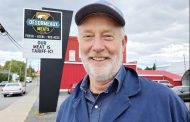
Steven (left) and John Gunnewiek say maple provides greater gross revenue per acre than corn, wheat and beans.
Love that lightning in a bottle
The world has discovered Canada’s maple syrup, offering local producers a growing opportunity
You may recall the James Bond parody, Austin Powers: International Man of Mystery. In the story, the villain Doctor Evil is launched into space, cryogenically freezing himself in 1967. Thirty years later, he returns to earth and is thawed to resume his diabolical career.
Devising a plan to hijack nuclear warheads and hold the world hostage, Dr. Evil – with his frozen, 30-year-old perception of reality – demands from the United Nations a ransom of unbelievable proportions… ONE MILLION DOLLARS!!!








It was with similar fanfare this fall that the Ontario government unveiled the Maple Production Improvement Initiative. Meant to kick start Ontario’s syrup industry with both federal and provincial funds scraped from the couch cushions, the program earmarked ONE MILLION DOLLARS for the cause. A cost sharing effort: a 50 % subsidy of up to $20,000, the program was meant to be rolled out over two years. It filled up in less than a week.
Dr. Evil’s henchman, Number 2, was able to convince him, given contemporary economics, to increase his ransom to One Hundred Billion Dollars. Although the Ontario maple industry will never see those sort of funds, it was no doubt very clear to the Ontario Soil and Crop Improvement Association (which administered the program) that there was tremendous pent up demand for this sort of assistance.
Maple syrup is such a magical product: a unique sweet liquid resin, distilled from the lifeblood of trees. The world has found out about it, and it’s in demand as a gourmet delicacy from Paris to Tokyo. We’re fortunate to be located in the temperate forests of the northeast: the only spot in the world where it can be produced. Quebec has captured lightning in a bottle, and dominates the trade: it’s created a billion dollar plus industry that employs over 12,000 people. And while the Quebecois bleed syrup, Ontario lags far behind: despite having more potential taps, we make a mere 3 % of their crop. The good news is that there are bright lights in the forest here, ready and willing to demonstrate how to access the potential that shrouds our hills and valleys all over the province.
One can only imagine what some Dutchmen made of the practise in their new home, having escaped their war-torn homeland in the wake of Europe’s second suicide attempt: tree sugar? When Steven Gunnewiek’s Opa arrived here in the 1950s he started tapping trees like all of his neighbours. Every dollar was needed and there wasn’t much else to do in March anyways. Carrying buckets and cutting wood was worth the effort, even to make a crop of 100 gallons. There’s something about the magic of maple that hooks people, and these forward-thinking dairy farmers have made the business of maple a cornerstone of their farm just outside Elgin, Ontario ever since.
Steven’s father, John, followed in his father’s footsteps. He installed their first tubing systems way back in 1972. He still watches the arch, but the latest generation: Steven and his wife Emma-Lee, have brought the operation up to speed with the latest technology. Currently, they manage some 3,800 taps and serve to demonstrate how maple can fit into a diverse working farm.
The Gunnewieks are high-yield farmers: if they’re going to do something, they’re going to do it right. Everything in their maple operation is clean, orderly, well-lit and user friendly – the record keeping is meticulous: it’s about what you’d expect when Dutch cowmen set their minds to making syrup. Robot milkers have taken a bit of pressure off.
“I wouldn’t say we spend any less time with the cows – it’s just a different sort of management,” Emma-Lee tells me, so while they might be a bit more flexible, they can’t afford not to run a very tight ship: there are only so many hours in the day.
Accordingly, they tend to overbuild their systems – reducing labour and leaving room for growth. They rapidly concentrate their sap to 20 Brix, and utilize a new, large, 3.5 ft. x 14 ft. high-efficiency wood-fired evaporator for quick boils so that energy can be balanced between barn and sugarhouse. Plenty of sap storage and filtering capacity means that work gets done at the peak of the season. Thirty-two remote sensors in the bush puts temperature, tank level and vacuum data right on their cell phones. “Everything we invest in here is meant to make better use of our time. We’re trying to make life easier so we can focus on quality,” Steven explains.
The Gunnewieks run high vacuum and achieve very good yields, often harvesting over 1.5 litres per tap. Their woodlot might better be described as a maple orchard. They sell about half of the crop in bulk by the barrel, a portion at the farmgate, and the remainder through local retailers like Gordanier’s Grocery, just down the road. The sugaring operation fits in perfectly with the patchwork landscape of Leeds County, extracting revenue from marginal land, “We’re paying taxes on it anyway!” laughs Steven. They’re coy to describe their operation as a “hobby.” The fact is that at the Gunnewieks, maple provides greater gross revenue per acre than the corn, wheat and beans.
Although maple can be a vibrant component within a diversified farm, if you’ve got the nerve, you can make it your whole life. “Pure Maple” is usually how we refer to the finished product, but when it comes to Andrew Mackey and Hali Burnham “Pure Maple” can apply to people too. Nestled in the rolling Lanark Highlands north of Perth, in Macdonald’s Corners, their operation is in the heart of one of Ontario’s most productive maple districts.
“We’re a tight knit group up here. We help each other out however we can,” Hali describes the community of producers. Andrew’s step-father, Charles Temple, was a city kid from Toronto who fell in love with sugaring: two years ago, the family celebrated his 50th year at the evaporator. He was a visionary who came to the right place. Well-drained hardwood forests, a good snow pack and just the right season means that you can make the most ‒ and some of the best ‒ syrup here, if you have what it takes.
Fifteen years ago, Andrew and Hali took the plunge. They quit their day jobs and bought out his stepfather’s operation on Ferguson Sideroad. Expanding from 5,000 to 10,000 taps, the Temple operation is their one and only source of income in a very rough country.
To do so, they do an impeccable job in the woods, in the sugarhouse, and most importantly, at market. The couple does not ship a single barrel of syrup. They squeeze every penny they can from their crop: they bottle it, they turn it into candy, and most impressively, they spread their infectious enthusiasm for syrup all over the province.
Whether they’re selling taffy at Winterlude in February or spinning maple cotton candy on Thanksgiving in Niagara, Andrew and Hali are bubbling spokespeople for maple. While completely sincere, they can’t afford not to be. “You have to make the most of what you’re working with,” Andrew tells me, and he means it. Three out of the past five years they’ve managed to make over two-litres of syrup per tap.
Do they do it with Wifi? Nope, boots on the ground. They’ll have a handful of expert workers cruising the bush every day of sap season, scouring the forest for the slightest leak. This effort translates into prodigious amounts of syrup, and whether you see them on the shelf at your local grocer, or chat with them at a festival, Andrew and Hali want to say thanks. As much as their livelihood relies on trees, it really comes down to human relationships.
Maple is a strange brew of art and science, people and terrain. It’s a labour of love, but it also pays. If you want to get in on it, if you want to know how: just talk to your local syrup maker, they’re some of the finest people you’ll ever meet. There’s lots of room here in Ontario.
Charles Summers owns Salt of the Earth Farm, a direct-to-consumer operation selling vegetables at the roadside, near Lyndhurst, Ontario.