Despite tremendous pressure, dairy farmer and cheesemaker Adam van Bergeijk does not want to sell his farmland to the Region of Waterloo.
Gouda kings in battle at Waterloo
Wilmot Township cheese makers refuse to sell their land for industrial project
Nelson Zandbergen
Farmers Forum
NEW HAMBURG — The only farm-based cheesemaker in Waterloo Region will lose land needed to feed the operation’s dairy cattle if the municipality succeeds in expropriating a tract of farmland for undisclosed development purposes in Wilmot Township. And it’s weighing on the owners.
“Well, you go to bed with it, you wake up with it in the middle of the night and you wake up with it again in the morning,” Mountainoak Cheese owner and prominent project opponent Adam van Bergeijk said. “It’s your business, it’s your livelihood, it’s your future.”




But for the involved officials angling to get his land, “it’s just a nine to five job,” he added.
“And when they walk out of their office at 5 in the afternoon, they leave their thoughts behind and care about their plans for tonight and the hockey game and their weekend at the cottage. And here we are trying to run a business and trying to survive as a business, and you don’t know what the future is going to look like and what the future for your kids is going to look like.”
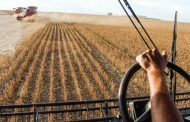
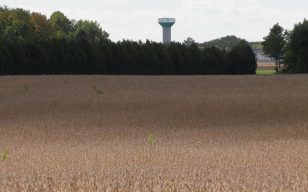
The Region wants to assemble 770 acres west of Kitchener for the controversial — and secret — development. The coveted tract includes 150 acres owned outright by the van Bergeijk family dairy farm plus an additional 210 rented acres. The milking barn for their 250 Holsteins and their cheese-processing facility and on-farm store are just outside the targeted area. The family makes and sells an award-winning line of Gouda cheese, under their Mountainoak brand.
Eleven property owners, including six farmers, were initially approached with an offer, some as early as January. One farmer and three homeowners sold out earlier this summer.
If the hold-outs continue to refuse, the municipality could force them into a sale through expropriation. Offers received to date have been “low ball” and below market value, according to van Bergeijk.
At least one property owner has been offered $35,000 an acre but others argued this is a fraction of the land’s actual market value. The Expropriation Act allows for expropriation for a “public purpose,” typically a hospital or school.
Speculation has run rampant that Wilmot may be in the running for another one of Ontario’s publicly funded electric vehicle battery plants. But the local politicians won’t say what will end up occupying the contested space.
“It could be a garbage dump. It could be some chemical plant,” said Arjo van Bergeijk, Adam’s son and partner in the Mountainoak operation. It could be an airport, for that matter, he told Farmers Forum. “Who knows?”
The expropriation gambit does not involve the van Bergeijks’ main farmstead and cheese-processing facility on Huron Road. But even if the family managed to replace the acres desired by their municipality — which they also require for spreading manure — they’re still left with the prospect of being next door to some sort of industrial site. And that’s an especially big fear, they say, expressing concern about pollution. “My cows cannot handle contaminated water. They cannot handle contaminated air,” Adam van Bergeijk said. “And stray voltage is not a good thing, either.”
Meanwhile, moving the farm lock, stock and barrel to another location would put them a much farther distance from their current customer base in the Kitchener area, he pointed out.
Customers have been unanimously supportive, he noted. The amount of retail traffic up the farm lane has actually increased since the farm has come under threat.
Adam van Bergeijk is an outspoken member of a group that has organized opposition to the municipal land grab. The ‘Fight for Farmland’ effort drew 400 people and dozens of farm tractors to the Region of Waterloo’s Aug. 28 council meeting. They also filled the council chambers, although “the chair was not so impressed with it,” he observed.
In a noteworthy decision, all councillors voted to destroy no more crops on farmland acquired by the Region. The decision came after a contractor shredded 160 acres of growing corn on the first 220 acres recently purchased by the Region, a move that almost seemed designed to stick a thumb in the eye of local farmers.

A slow-roll of a few dozen tractors filed into Kitchener on August 28 and demonstrators gathered in front of the Region of Waterloo headquarters to protest the Region’s plan to buy or expropriate 770 acres of farmland for an industrial purpose that Region officials decline to talk about. The seven of 11 property owners who refuse to sell their land have been extremely vocal, highly organized and have won public support. (Wilmot protestor photo)