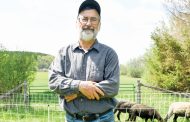
The Snyder Family Farm, southwest of Kitchener, is expanding to include more Christmas and winter themes.
Nelson Zandbergen
Farmers Forum
KITCHENER — Halloween and Christmas are good for business at Snyder Family Farm. The agri-tourism operation’s “Fear Farm” fright nights are followed by the hustle and bustle of Christmas tree sales.
While Halloween is the farm’s busiest time of year, the owners recently expanded their wintertime pursuits to include 24 winter campfires. More elaborate Christmas-themed walk-throughs are also planned for next year.
“Our biggest competition is Canada’s wonderland” just over a one-hour drive to the east, says Meghan Snyder, who operates Snyders Farm southwest of Kitchener.
This year, higher Christmas tree prices have sparked media headlines because — surprise, surprise — costs are higher. Snyder’s trees are priced at $100 (plus tax) or $90 to cut your own. Snyder says she knows of growers asking $150 and doesn’t begrudge them as there is a tighter supply and input costs have gone up.







Meghan and her husband, John, plant 5,000 Christmas trees annually at their popular agri-tourism operation which was awarded the 2023 farm family excellence award from Ontario’s agriculture ministry. They have a crop of 30,000 Christmas trees growing on 30 acres at any given time.

The farm also has an on-farm bakery, a candy-filled barn and seasonal local beer in the pumpkin pub. The operation attracts 60,000 visitors each year has 200 employees and only two main crops: pumpkins and Christmas trees.
Because a Christmas tree can take as much as 10 years to be ready for harvest after planting, Synder points out that it can be difficult to determine demand a decade out.
At the same time, cheaper “side hustle” Christmas tree growers have been exiting the market, she says. “Years ago, you could be a retired teacher, and you would plant some trees on some land that you had, and maybe you wouldn’t spray them and maybe you wouldn’t water them,” she says. “But now, growers are saying, well, wait a second, with the input cost, the tree cost and the effort and the work, am I going to do that?”
Christmas trees are treated as a serious crop at the Snyder farm. They exclusively grow Balsam and Fraser fir species. They mechanically plant the tree seedlings, irrigate the trees, fertilize them, prune them for shape, pick off developing pine cones, mow between the rows, and apply sprays to ward off disease. And that all costs more in today’s economy.
“I can’t pay anybody less than $25 per hour to do the work that we do,” she also says. “It’s a ton of work, and it’s work done in the summer, when it’s hot.”
The farm spent a week planting its first group of 500 Christmas trees by hand about 10 years ago. Those seedlings cost only a third of the price of what they cost today (90 cents versus $2.80 apiece). The farm now has a tree planting implement capable of planting 1,500 trees a day.
It was the terrifying reality of pandemic restrictions — not Halloween — that cajoled the owners to start expanding into outdoor winter activities in 2020. With COVID-19 rules curtailing their fall visitorship by 70 % that year, the Snyders transformed a 4-acre area into a sophisticated winter campfire area with 24 available fires for paying groups of up to 25 people. The fire spot remains a staple attraction.
Meghan Snyder says that while her husband was raised on a dairy farm, she grew up in downtown Toronto. That “city versus country” relationship is part of their success, she says. “Because if you grow up in the country, I don’t think you realize that there are people who have never met a sheep or have no idea that a corn maze isn’t made of sweet corn.”
She adds that it’s really important to her to provide that authentic rural experience to urban residents “because I realize how uncommon it is.”