Nelson Zandbergen
Farmers Forum
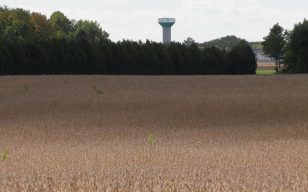
EDWARDSBURGH CARDINAL — A nearly $1 billion battery storage project has broken ground on 30 rural acres in the Township of Edwardsburgh Cardinal, 60 km southwest of Ottawa, and a few kilometers east of Spencerville.
Set for completion in 2027, the lithium ion batteries in the 411-megawatt Skyview 2 project will contain enough energy, when fully charged, to meet the electricity demand of 400,000 homes over a four-hour period. It was touted as the largest battery energy storage system (BESS) project ever procured in Canadian history when Premier Doug Ford, the provincial energy minister and local officials gathered at the site with the project partners, the Algonquins of Pikwàkanagàn First Nation — whose reserve is located near Eganville — and Toronto-based Potentia Renewables Inc.
This type of industrial-scale battery energy storage system (BESS) is not intended as a backup in the event of a blackout. Instead, it’s meant to augment the existing power supply on the grid. The facility “will store electricity from the grid during periods of lower demand, then release it during peak times,” Ford said.
When demand is low, Ontario often exports excess electricity out of province at a steep discount, effectively losing energy that Ontario ratepayers paid to create. In theory, BESS technology should help to keep that low-cost power at home.
Energy Minister Stephen Lecce said the system also stabilizes the grid and “keeps your rates low for families and seniors.” The Skyview 2 project represents the largest single chunk of the 3,000 megawatts of battery energy storage procured by Ontario, a total Lecce described as the third highest in North America.





Ontario has 26 BESS projects in various stages of development, three of which are now operational. The largest of those is the 250-megawatt Oneida Energy Storage project in Haldimand County. Indigenous groups are partners in 9 of the 10 most recently approved projects, including Skyview 2. The province has programs that fund native groups’ involvement in the procurement process. They end up as 50 % owners with corporate partners, on bids that get a higher rating in the selection process because of Indigenous involvement.
“Together, we are showing that when First Nations are included as full participants in Canada’s energy landscape, everyone benefits,” Algonquin Chief Greg Sarazin said.
Sarazin said it was a “proud day” and thanked the other politicians at the scene for “their ongoing commitment to economic reconciliation.”
Edwardsburgh Cardinal Mayor Tory Deschamps reported the project’s value at “nearly a billion dollars.”
The province isn’t contributing toward that capital cost. However, the Independent Electricity System Operator offers a 20-year contract for the power that pays well enough for the owners to make it work, and that’s ultimately paid by hydro customers. Some critics argue that this cost — combined with the risk of chemical fires at a BESS site — isn’t worth it.
Just how big is the project now taking shape in Edwardsburgh Cardinal? In raw numbers, the facility will output up to 411 megawatts, and it will store 1,644 megawatt hours of electricity. That’s the equivalent of the battery power of almost 22,000 Tesla Model 3 cars parked in one place.