OTTAWA — The Senate recently debated a farmer-promoted bill to exempt grain-drying and barn-heating from the federal carbon tax. But the bill is getting push-back from a British Columbia senator appointed by Prime Minister Justin Trudeau.
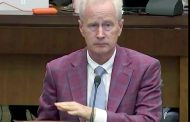
Senator Yuen Pau Woo argued against Bill C-234, saying “the value of a carbon tax is greatest when it has few exemptions.” Woo instead suggested other means of supporting the affected operators, during the May 9 exchange in the upper chamber. “The traditional remedy for these kinds of problems in economics is price and income support. Why don’t we look to that kind of protection … rather than fiddling with a carbon tax and creating a carve out that might distort incentives away from our combined and collective goal of reducing carbon emissions?” he said.
The Senator also fretted that if the bill passed, farmers wouldn’t invest their carbon-tax savings in geothermal and solar technology to cut emissions.
Woo rode to China’s defence during his maiden 2016 speech in the Senate. At the time, he criticized a Senate motion condemning China’s aggressive behaviour in the South China Sea, prompting former Toronto Conservative MP Peter Kent to describe him as an “apologist for the Chinese dictatorship.”
A sympathetic-to-China trend has continued through Woo’s tenure in the Red Chamber.
- In a 2021 speech, Woo raised eyebrows by arguing that Canada shouldn’t condemn China for human rights violations. However, China has detained about one-million Uyghur Muslims without charge in re-education camps, according to the BBC.
- That same year, when China released the “two Michaels,” Woo tweeted that Canadians should ponder the lessons learned from the stand-off with Beijing over the arrest of Huawei executive Meng Wanzhou. His tweet linked to a Toronto Star op-ed quoting a former U.S. ambassador who claimed that the “U.S., assisted by Canada, took Meng hostage in the first place …”
- More recently, Woo has spoken out against a foreign influence registry for Canada, after CSIS leaked documents showing Beijing’s interference in Canadian elections. Woo suggested such a registry could subject thousands of Chinese-Canadians to unfair treatment and foster racism.
- Just last month, Woo spoke out in defense of two Montreal-area Chinese community organizations after the RCMP accused those groups of hosting secret Chinese government police stations.
Meanwhile, Newfoundland and Labrador Senator David Wells, sponsor of C-234 in the Senate, disputed Woo’s use of the term “carve out” to describe the bill’s carbon-tax exemption. Wells said the bill was simply an expansion of existing carbon-tax exemptions for agriculture, such as the tractor fuel and the majority of greenhouse heating costs already free of the charge. The fact that grain-drying and barn-heating were not originally excluded from the Greenhouse Gas Pollution Pricing Act was an “oversight” in need of correction, the Conservative senator said.




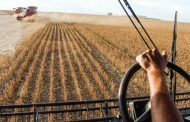
C-234 is the private member’s bill of MP Ben Lobb (CON — Huron-Bruce). It’s currently in the Senate after passing all three readings in the House of Commons earlier this year. Canadian farmers have been eagerly awaiting the bill’s passage because the ever-increasing carbon-tax continues to make grain-drying more expensive relative to the American competition. The carbon-tax exemption would expire after 8 years but could be extended with a motion passed in the House at that time.
A similar bill died in the Senate when a federal election was called in the summer of 2021.
The Grain Farmers of Ontario estimates that individual farmers could end up paying $50,000 to $70,000 in annual carbon tax by the end of this decade, unless the charge is removed from grain-drying.
Ontario Senator Rob Black, another Trudeau appointee, said the bill wasn’t perfect, “but I believe we need to work diligently to pass this bill as soon as possible before we rise for the summer recess. Our farmers need this relief now for this coming fall’s harvest and for future planning.”