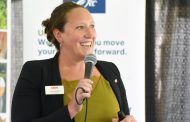
London-area dairy goat farmer Monique Spanjers has concerns about the new goat marketing board.
Bill 109: Small dairy operations fear new board power will squeeze them
Nelson Zandbergen
Farmers Forum
OTTAWA — Proposed changes in the oversight of dairy farmers play into the growing fear that the government is favouring big farms to squeeze out small ones.
Independent and small-scale dairy producers in Ontario are raising the alarm about proposed Milk Act amendments they fear will grant too much power to the Dairy Farmers of Ontario (DFO) and the incoming Dairy Goat Farmers of Ontario (DGFO).
The Milk Act changes are among a raft of amendments to several provincial ag-related laws under Bill 109, which could receive third reading at Queen’s Park and come into effect later this year.

While media attention has focused largely on foreign farmland ownership restrictions contained in the bill, the expansion of dairy board powers would come at the expense of smaller dairy farm and on-farm processor operations in both the cow and goat dairy sectors, according to two farmers who shared their concerns with Farmers Forum.

Ellen Biemond, Iroquois dairy farmer and on-farm milk-plant operator.
Iroquois dairy farmer and on-farm milk-plant operator Ellen Biemond and London-area dairy goat farmer Monique Spanjers were not impressed with the idea of devolving more authority to the DFO and DGFO. Bill 109 would take regulatory power over milk quality, testing governance, sampling fees and product detention out of the hands of Ontario’s Ministry of Agriculture, Food and Agribusiness and transfer that power to the respective dairy marketing boards.
For Biemond, who milks 50 cows and processes and retails all of the herd’s output independently, the shift in oversight from an independent ministry to a producer-run marketing board increasingly dominated by larger producers, creates an inherent conflict of interest favouring larger dairy farms and the big players in the processing industry.
“These amendments … are going to benefit the big guys, the big farms, the big processors … because it will give (the DFO) more freedom a lot of the time,” Biemond said.
As an example, she pointed out that the current penalty structure for exceeding somatic cell counts (SCC) already places small herds at a disadvantage. In a 500-cow herd, high somatic cell readings in the milk of one animal would be diluted by hundreds of others. But in a 50-cow herd, “a single bad quarter on one cow in a single milking” can push the entire bulk tank over the 400,000 cells/ml threshold, she said. So it’s easier for a smaller herd to fall afoul of the rule and incur penalties in a rolling 12-month period, she said. She could foresee an empowered DFO tightening up the SCC rule even more if the organization believed the average, larger dairy farm could comply without too much trouble.
“They’re giving the DFO more freedom to change programming,” she warned.
Biemond also highlighted how Bill 109 expands the definition of dairy “processing.” Where that activity currently involves specifically defined fluid milk products and cream, this will change to simply processing a “regulated product.” It means large processors will have greater freedom to use lower-class milk powders and modified milk byproducts, she said.
For Monique Spanjers, the impact of Bill 109 will be felt acutely within the unique dynamics of the much smaller, free-market dairy goat sector. Spanjers milks 1,400 to 1,500 goats on her farm 20 kilometers west of London, Ontario, and ships milk independently alongside four other farm families through a broker to four different processing plants.
Goat milk producers operate without supply management and fixed pricing, in an open supply-and-demand market where individual farmers and independent brokers compete against each other. Some, like Spanjers, also compete against the two dominant co-operative broker-processors (Gay Lea and Ontario Goat Co-op).
Spanjers fears that a newly established Dairy Goat Farmers of Ontario (DGFO) board could be empowered to collect operational information at each goat dairy farm — everything from barn capacity, animal numbers, shipping volumes, pricing, and cost-of-production metrics. She stressed that sharing sensitive farm data with a board dominated by directors connected to the two dominant brokers would harm competitive independence.
“If we have to provide information to our colleagues and still be competitive with them, that would be a weird situation,” she said.
“They will say, yeah, we’re not allowed to do anything with this information, but if you could get it handed to you on a plate, why wouldn’t you take a bite out of it? That’s our concern.”
She said that policymakers are ignorant of the unique circumstances of the goat dairy sector but have lumped cow and goat dairy together in the envisioned changes under Bill 109. “If they were the same, why would we milk goats? Because it’s way more work. It’s not as profitable. So why would we do that if goat milk and cow milk would be exactly the same? It’s not. It’s a different product.”
She quipped, “When it’s white and it’s cold, it’s not always the same. It could be snow.”
Another concern for Spanjers is the controversy around the impending establishment of the new DGFO board. The province’s goat milk producers voted in May to create the non-supply-managed marketing board, a first for the sector. While the government commission that oversaw the vote says a majority of producers voted in favour, they refuse to be transparent about it and won’t release the result of the vote or participation rate.
Furthermore, prior to voting for a goat board, producers were not told that the province was about to substantially up the powers of the new board after the vote took place. Spanjers also highlighted her worry for the Mennonite and Amish producers who likely didn’t vote but will be subject to the DGFO’s regulatory authority.
Spanjers pointed out that some of these traditional farms still cool their milk using ice blocks or water-drip agitators. “I really worry about that because it’s the charm from our industry, those Mennonite farmers.”
Spanjers brought her grievances to a legislative committee in Toronto last month. As few as 40 producers may have made the decision to establish the new board for Ontario’s 200 dairy goat farmers, she told politicians.
It’s up to OMAFA minister Trevor Jones whether the province actually proceeds with creating DGFO, following the recent recommendation by the Ontario Farm Products Marketing Commission.