OMAFA’s Ian deSchiffart reported on a five-year research project using drones to broadcast winter wheat seed in standing soybean fields.
Benefits of drone-seeding winter wheat into soybeans
Nelson Zandbergen
Farmers Forum
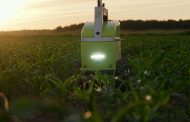
WINCHESTER — Drone-seeding winter wheat into standing soybeans offers better flexibility and can potentially lower overall costs, even with a slight yield drop compared to conventionally planted wheat, according to findings shared at the Winchester research station’s crop research day on June 30.
OMAFA research technician Ian deSchiffart detailed five years of aerial research on drones deployed to broadcast winter wheat seed into standing soybeans before the soybean harvest. By contrast, a traditional on-the-ground seed drill must wait until after harvest.
In Eastern Ontario, keeping winter wheat in rotation with corn and soybeans is a challenge as the optimal seeding date for winter wheat often occurs when the soybeans are still out in the field. Using earlier-maturing soybean varieties can help move up the harvest window, but this sacrifices some soybean yield. Drone-broadcasting breaks the timing bottleneck and delivers a dual benefit. The winter wheat is seeded into a standing crop of longer-maturing, higher-yielding soybeans, and it happens during the September period that the wheat needs to thrive and deliver a better wheat yield the following summer.

Addressing the field trial data, deSchiffart noted that in 2024, the post-harvest drilled wheat achieved the highest yield at 128 bushels per acre. In comparison, the top drone-seeded yield, planted at the optimal date of Sept. 19, yielded 122 bushels per acre.“So not far off,” deSchiffart remarked.
Drone-seeding also has the potential to cut input costs, compared to large tractors hauling conventional seeding equipment. deSchiffart noted that new commercial ag drones like the DJI T100 have dropped in price to around $50,000, down from $100,000 two years ago. Custom drone application rates discussed at the event cost about $20 an acre.
Unlike conventional seeders that put seed directly in the dirt, broadcast seeds land on top of the soil surface. That can pose challenges in a dry fall. To the rescue is a special biodegradable seed coating designed to attract and suck up surrounding soil moisture to assist germination. deSchiffart and colleagues at the University of Guelph have partnered with Tizazu Mekonnen, a University of Waterloo researcher, to develop the coating with funding from Corteva.
“It’s like a biopolymer that completely breaks down. There’s no plastic on it,” deSchiffart said. The team tested various iterations in the lab before selecting the best formulation to broadcast in the field.
Aerial broadcasting produces an initial crop stand that appears patchy in the fall, but deSchiffart emphasized that it recovers well by harvest. “It tillers like crazy.”
He didn’t see drones completely replacing seed drills but believes the technology offers strong potential for cover crop establishment and timely field work when ground conditions prevent heavy machinery usage.
Provincial regulations in Ontario currently limit agricultural drones to applying seed and fertilizer. The industry otherwise took a big step toward drone-applied pesticides — a Holy Grail for the sector — when Health Canada recently okayed pesticides already approved for use with crop-dusting planes and choppers to be used with drones as well. Now the province is the sole obstacle for that expanded use.